



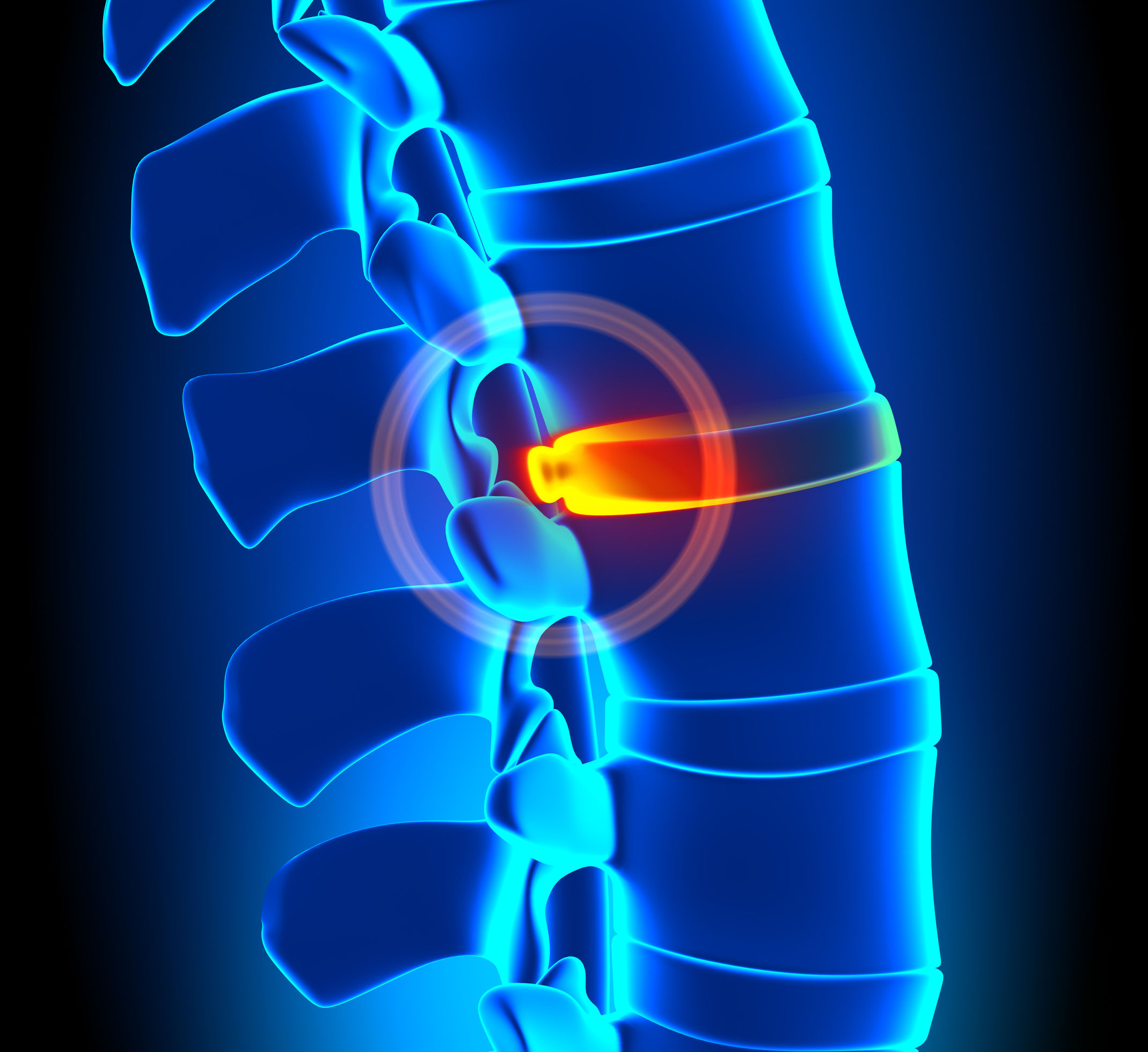
Mechanism of action of spinal disc decompression
How does treatment with the SpineMED® procedure work?
Injured or damaged intervertebral discs heal very slowly because the disc is exposed to constant pressure. The spinal decompression procedure is a treatment method in which the intradiscal pressure is reduced, thereby supporting the diffusion of fluid, nutrients, and oxygen from the surrounding area, and allowing the disc to regenerate, rehydrate (soak up with fluid), and retract to its original position (repositioning/regenerative medicine).
The system independently and computer-controlled performs a biofeedback-controlled intermittent distraction (stretching) of the spine (“dynamic distraction”), whereby the distraction force can be directed precisely to the affected spinal segment (or intervertebral disc) (e.g. L5/S1). In addition, the physician knows exactly how much force is actually applied to which segment.


The dynamic application of the distraction force (referred to as “ramping”) prevents the patient from experiencing any defensive tension, unlike conventional extension procedures (traction devices).
The patient receives a visualization of the tension changes in their spinal musculature via a screen through an integrated biofeedback system and can react to it (relax) = biofeedback.
THE FOLLOWING GOALS ARE SOUGHT THROUGH THE
SPINEMED® TREATMENT:
Distraction of the spine to increase the intervertebral distance (mechanically) (“create space”)
Dynamic distraction leads to a decrease in intradiscal pressure.
Improvement of metabolism (fluid, water, nutrients) and rehydration.
Repositioning of intervertebral disc tissue
CONTACT US!
You are currently viewing a placeholder content from HubSpot. To access the actual content, click the button below. Please note that doing so will share data with third-party providers.
More Information